Your Body Has a Hidden Drainage System — Yoga Has Been Activating It for Centuries
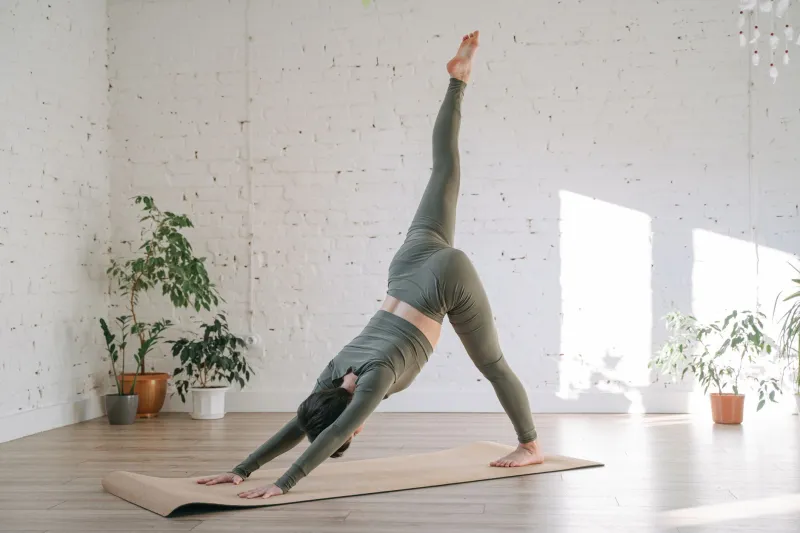
You've probably heard about the lymphatic system somewhere between a biology class you half-remember and a wellness TikTok you scrolled past at midnight. But here's the thing: this network of vessels, nodes, and fluid is doing serious work inside you right now — filtering waste, moving immune cells, and managing inflammation — and most of us are doing almost nothing to support it.
Modern medicine is increasingly paying attention to lymphatic health, especially its connection to chronic inflammation, immune function, and even cognitive performance. Ancient yoga practitioners didn't have the vocabulary of lymph nodes or interstitial fluid, but they understood something fundamental: the body needs to move to stay clean. And the practices they designed thousands of years ago? Turns out they're pretty much exactly what the lymphatic system needs.
What the Lymphatic System Actually Does (And Why It Gets Stuck)
Unlike your cardiovascular system, which has the heart pumping blood around the clock, your lymphatic system has no dedicated pump. It moves entirely through muscular contractions, breathing, and body movement. When you sit still for hours — which, if you're like most Americans, you absolutely do — lymphatic flow slows down. Fluid can pool, tissues get congested, and your immune response gets sluggish.
The results aren't always dramatic. Sometimes it's just that low-grade puffiness you notice in your face or ankles. Sometimes it's persistent fatigue, a tendency to catch every cold going around the office, or inflammation that never quite resolves. Lymphatic stagnation is subtle, but it compounds over time.
Yoga, at its core, is a system built around moving the body in every direction — compressing, stretching, inverting, twisting — while coordinating breath in ways that create internal pressure changes. That's essentially a manual pump for your lymphatic network.
Why Yoga Is Uniquely Suited for This
Here's what makes yoga different from, say, just going for a walk. Lymphatic vessels are incredibly sensitive to the kind of rhythmic compression and decompression that yoga creates. Twisting poses squeeze organs and tissues, then release them. Inversions use gravity to shift fluid toward the heart. Deep diaphragmatic breathing generates pressure changes in the thoracic duct — the body's largest lymphatic vessel — that literally pull lymph through the system.
Yogic texts speak of prana (life force) and apana (the downward-moving energy responsible for elimination) as forces that need to be kept in dynamic balance. The practices designed to regulate these forces — breath retention, specific asana sequences, energetic locks called bandhas — map surprisingly well onto what we now understand about fluid dynamics and detoxification physiology. Ancient wisdom, modern validation.
The Moves That Actually Matter
Inversions: Let Gravity Do Some Work
Any pose that gets your legs above your heart is doing your lymphatic system a favor. Legs-Up-the-Wall (Viparita Karani) is probably the most accessible option for most people — you literally lie on your back and prop your legs against a wall. Five to ten minutes here allows lymph that's pooled in the lower extremities to drain back toward your core lymph nodes.
Shoulder stand and supported headstand take this further for practitioners who are comfortable there, but don't feel like you need to go full inversion to see benefits. Even elevating your legs on a couch while you breathe deeply is a meaningful step.
Twists: The Squeeze-and-Release Effect
Spinal twists are essentially wringing out your internal tissues. When you twist and compress the abdomen, you increase pressure in the surrounding lymphatic vessels. When you release, fresh lymph rushes back in. Seated twists like Ardha Matsyendrasana (Half Lord of the Fishes) and supine twists done at the end of a practice are both highly effective.
The key is to not rush through them. Hold for several full breath cycles. Let the compression do its work before you unwind.
Forward Folds: Compression at the Core
Standing and seated forward folds compress the abdominal region in a way that stimulates the mesenteric lymph nodes — a major hub of lymphatic activity in the gut. Given that a significant portion of your immune tissue lives in and around your digestive system, this is more important than it might sound.
Paschimottanasana (Seated Forward Bend) and Uttanasana (Standing Forward Fold) are your workhorses here. Again, breathe deeply while you're in the fold rather than just hanging there waiting for the timer to go off.
Chest Openers: Freeing the Thoracic Duct
The thoracic duct empties lymph into the bloodstream near your left collarbone. Poses that open the chest and stretch the front body — like Matsyasana (Fish Pose), Bhujangasana (Cobra), or a simple supported backbend over a rolled blanket — help clear congestion in this critical area. If you spend your days hunched over a laptop, your thoracic region is probably compressed in ways that restrict lymphatic flow more than you realize.
The Breathing Piece Is Non-Negotiable
If you only take one thing from this article, let it be this: deep diaphragmatic breathing is one of the most powerful lymphatic tools you have, and it's completely free.
The diaphragm sits directly above the cisterna chyli, a major lymphatic collection point. Every time you take a full, deep breath that drops the diaphragm down into the belly, you create a suction effect that draws lymph upward through the thoracic duct. Shallow chest breathing — which is how most stressed-out, screen-addicted Americans breathe most of the time — barely activates this mechanism at all.
Nadi Shodhana (alternate nostril breathing) and simple belly breathing practiced for even five to ten minutes a day can meaningfully shift lymphatic circulation. The yogic practice of Kapalabhati — rapid, rhythmic exhalations — takes this further by creating strong, repetitive pressure waves through the abdomen that essentially massage the lymphatic vessels from the inside.
Putting It Together: A Simple Daily Sequence
You don't need a two-hour class to support your lymphatic system. Even fifteen to twenty minutes done consistently will make a difference. Try this:
- 5 minutes of belly breathing lying down — let your abdomen fully rise and fall
- Legs-Up-the-Wall for 5-7 minutes — breathe deeply the whole time
- Seated twist on each side, held for 8-10 breaths
- Standing forward fold for 1-2 minutes
- A gentle chest opener to finish — fish pose or just lying over a rolled blanket
Do this in the morning to set your lymphatic system up for the day, or in the evening to help your body clear the metabolic load of everything you've processed since breakfast.
The Bottom Line
Your lymphatic system is working hard for you every single day without asking for much in return. The problem is that modern sedentary life gives it almost nothing to work with. Yoga — even a short, gentle daily practice — provides the rhythmic movement, gravitational shifts, and breath dynamics that this system genuinely needs to thrive.
No expensive gadget. No extreme protocol. Just ancient movement practices doing what they were always designed to do: keeping the body clean, fluid, and functional from the inside out.